On 21 December 2025, a new law was enacted to end six decades of exclusive state control over who can build a nuclear power plant in India. Private Indian companies will be able to apply for a licence once the Centre brings it into force. Foreign-incorporated ones still can't — and that exclusion is doing more work than the headline "India opens nuclear to private investment" suggests.
Energy · Nuclear Power · Investment Policy
India Voted to End Its 63-Year State Nuclear Monopoly. The Law Is Not in Force Yet, and Foreign Builders Stay Locked Out
Revised
· v1.0.0 · what changed
The Sustainable Harnessing and Advancement of Nuclear Energy for Transforming India Bill — SHANTI, a name chosen for the acronym, Sanskrit for "peace" — moved through Parliament in less than a week: introduced in the Lok Sabha on 15 December 2025, passed there on 17 December, passed by the Rajya Sabha on 18 December, and given presidential assent on 20 December; it was published in the Gazette of India on 21 December as Act No. 39 of 2025. Its section 1(2) brings it into force on dates the Centre notifies, and may set different dates for different provisions. It repealed and replaced two of independent India's oldest pieces of energy legislation, the Atomic Energy Act of 1962 and the Civil Liability for Nuclear Damage Act of 2010, with a single consolidated law. For the first time since 1962, the Act lets Indian-incorporated private companies, and joint ventures between government entities and private companies, apply for licences to build, own and operate nuclear power plants — a role the state, through NPCIL, had held alone for 63 years.
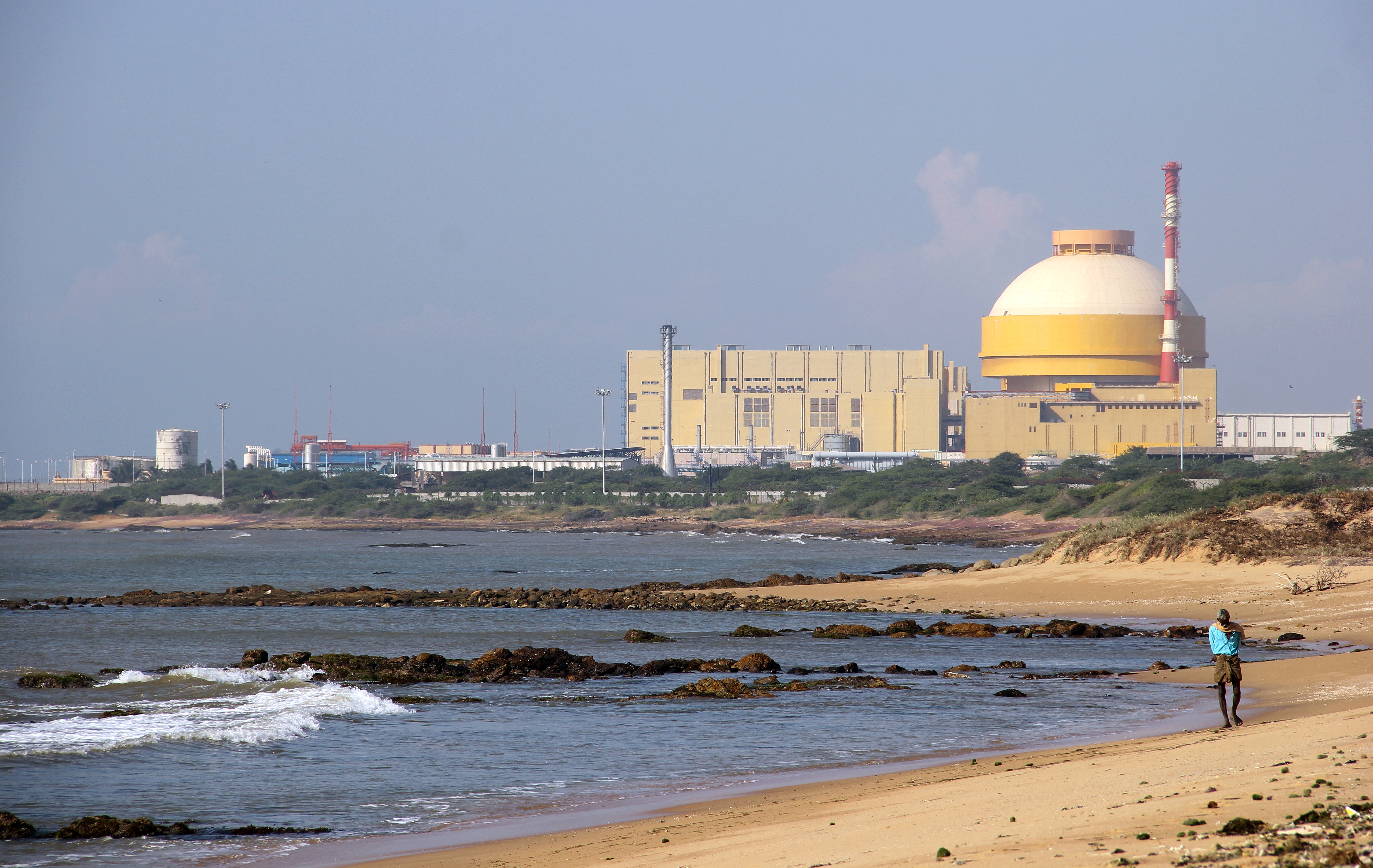
What actually changed on 21 December 2025
Before SHANTI, the Atomic Energy Act 1962 reserved nuclear power generation to central-government entities. The new Act (section 3(1)) lets government departments, government companies, “any other company” and joint ventures among them apply for licences, and defines “company” to exclude one incorporated outside India (section 2(9)) — a real, structural change, not a policy statement. It also grants the Atomic Energy Regulatory Board statutory status for the first time; AERB had functioned under a mere executive order since its creation in 1983, a standing gap in institutional independence that outlasted forty years of the sector's own growth. And it goes further than plant ownership: select fuel-cycle activities, including conversion, refining and enrichment of uranium-235, are now open to licensees up to a threshold value the government has yet to notify (section 3(2)(b)). Section 3(5) reserves to the Centre or wholly owned bodies the enrichment or isotopic separation of prescribed substances unless notified otherwise, the management of spent fuel including reprocessing, heavy-water production, and anything else the Centre notifies.
The foreign-investor door is a different, still-locked door
The explicit exclusion of foreign-incorporated companies from direct licensing is not an oversight; it leaves the actual obstacle to foreign nuclear investment untouched by SHANTI, because that obstacle was never really the 1962 Act's ownership rule. It was the Civil Liability for Nuclear Damage Act 2010's supplier-liability clause — a deliberate, India-specific design choice that holds equipment and technology suppliers liable in a nuclear accident, not just the plant operator, unlike the international norm under the Convention on Supplementary Compensation, which places liability on the operator alone. That single clause is why EDF's six planned reactors at Jaitapur, Maharashtra, and Westinghouse's six planned reactors at Kovvada, Andhra Pradesh, have sat stalled for over a decade: no major foreign reactor vendor has been willing to accept open-ended liability exposure to build in India. SHANTI repealed the 2010 Act outright, but the supplier-liability fix that could actually unlock Jaitapur and Kovvada is a separate reform still working its way through government, aimed specifically at bringing India's liability regime closer to the international norm without reopening the whole nuclear liability question in public debate.
What 100 GW by 2047 actually requires
India's installed nuclear capacity today is roughly 9 GW. The government's stated target is 100 GW by 2047 — more than an eleven-fold increase over roughly two decades. Industry estimates split that ambition three ways: NPCIL is projected to contribute more than 50 GW, NTPC has stated plans for 30 GW, and private-sector players have already announced more than 20 GW of projects in the months since SHANTI was enacted. A TERI (The Energy and Resources Institute) assessment puts the investment and reform effort required to hit the target at roughly ₹25 lakh crore.
The net read
SHANTI is a genuine structural break, not a proposal or a discussion paper — it has been law for nine months as of this writing, and it does something India's nuclear sector has not done since the Atomic Energy Act was first written: let a company other than the state itself apply for a licence to build a plant. What it does not do is resolve the specific, well-known reason foreign reactor vendors have avoided India for over a decade. Those are two separate fights, on two separate legislative tracks, and only one of them is finished.
Sources: this ecosystem's own digital-twin-for-ipa policy-watchlist research (layer 28, built 2026-09-14), which flagged the Sustainable Harnessing and Advancement of Nuclear Energy for Transforming India Bill 2025 via PRS India's bill tracker (prsindia.org/billtrack). Legislative timeline (introduction, Lok Sabha and Rajya Sabha passage dates, presidential assent, entry into force) per World Nuclear News and Deccan Herald coverage of the bill's passage. Licensing mechanics, the foreign-incorporation exclusion, AERB's new statutory status, the fuel-cycle provisions, the right of recourse and the repeal of the 1962 and 2010 Acts checked against the Act itself: The Sustainable Harnessing and Advancement of Nuclear Energy for Transforming India Act, 2025 (No. 39 of 2025), Gazette of India Extraordinary Part II Section 1, 21 December 2025, CG-DL-E-21122025-268697 (egazette.gov.in/WriteReadData/2025/268697.pdf), and its corrigenda of 8 January 2026 (CG-DL-E-08012026-269213), read via the SansadSaar index of the archive.org Gazette of India collection; also Law.asia, the Bulletin of the Atomic Scientists and Mondaq. The supplier-liability clause, its divergence from the Convention on Supplementary Compensation, and the Jaitapur/Kovvada stalled-project detail per Vajiram & Ravi and Rau's IAS current-affairs coverage of the separate, ongoing Civil Liability for Nuclear Damage Act reform. Capacity figures (9 GW current, 100 GW by 2047, the NPCIL/NTPC/private split, and more than 20 GW in private announcements) and the ₹25 lakh crore TERI estimate per Tribune/ANI coverage and Down To Earth's summary of the TERI report. None of these secondary sources were cross-checked against the Act's own gazetted text for this post. Commencement and rules status (9 November 2026): DAE, Rajya Sabha unstarred question 487, 23 July 2026; draft SHANTI Rules, 14 August 2026; Juris Eagle, law stated as at 28 October 2026.
- v1.0.0 — 15 September 2026 — first published.
What would fix this
- The Department of Atomic Energy should notify the threshold value up to which private entities may undertake uranium conversion, refining and enrichment under the SHANTI Act, so that the fuel-cycle opening the Act announces becomes an operable rule rather than a provision awaiting a number.
- The Department of Atomic Energy should publish the list of “activities of a sensitive nature” that remain under exclusive government control, so that private and joint-venture applicants know the boundary of what they may be licensed for before committing to projects.
- The Atomic Energy Regulatory Board should publish a register of licence applications from private companies and joint ventures, with capacity, site and status, so that the 20+ GW of announced private projects can be tracked against what has actually been applied for and licensed.
- The Department of Atomic Energy should release its draft supplier-liability reform for public consultation with a stated timeline, so that the separate fix that could unlock Jaitapur and Kovvada is visible as a document with dates rather than conflated with the ownership reform already in law.
- NPCIL and NTPC should each publish an annual project-by-project pipeline towards their 50 GW and 30 GW shares of the 100 GW target, by stage from site approval to commissioning, so that progress from today’s 9 GW is measured in capacity being built, not announced.
These are proposals from this blog, not recommendations any agency has adopted.
About this article: Researched, written and edited by Umashankar Triplicane Dwarakanathan, with AI research assistance; every figure is meant to trace to the primary source cited. See the Editorial Policy for how sourcing, AI use and corrections work.
